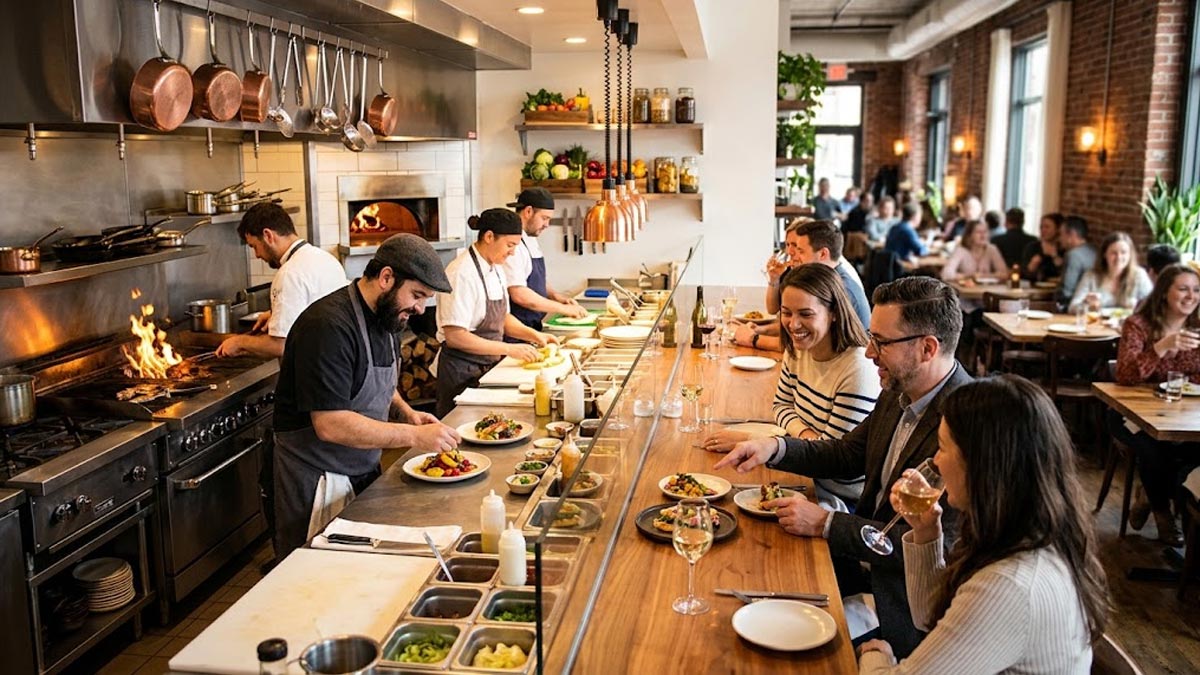
The boundary between the dining room and the kitchen has completely dissolved. The traditional restaurant setup—where food emerged mysteriously from behind a heavy swinging door—is rapidly giving way to open-plan culinary spaces. By putting the cooking process on full display, open kitchens have transformed a routine meal into an immersive form of dinner theater.
Here is how the shift toward open kitchens is fundamentally redefining modern dining culture.
1. The Rise of Dinner Theater
In an era where consumers value experiences over passive consumption, an open kitchen turns culinary preparation into live performance. Diners no longer just wait for their food; they watch the precision of the line cooks, the flare of open-flame grills, and the final artful plating. This visual engagement builds anticipation and adds entertainment value to every course.
2. Radical Transparency and Culinary Trust
Modern diners are more conscious than ever about food safety, ingredient sourcing, and kitchen hygiene. An open kitchen removes all doubt by offering total visibility.
- Hygiene Standard: Guests can see the cleanliness of prep stations in real time.
- Ingredient Honesty: Fresh, seasonal produce and high-quality cuts of meat are displayed openly before being cooked.
- Skill Appreciation: Watching the sheer effort and technical precision required to execute a dish builds a deeper respect for the price tag.
3. Breaking Down the Barrier Between Chef and Guest
Historically, chefs and line cooks worked in complete isolation from the people eating their food. Open kitchens foster a direct human connection. Cooks can gauge guest reactions instantly, while diners feel a personal bond with the hands crafting their meal. This dynamic transforms dining from a simple transactional service into an interactive social event.
4. Sensory Amplification
Eating begins long before the first bite. Open kitchens engage all five senses simultaneously:
- Sights: The rhythmic motion of chopping, searing, and plating.
- Sounds: The sizzle of pan-searing, the clinking of copper cookware, and calm kitchen calls.
- Aromas: The intoxicating scent of woodsmoke, roasting garlic, and caramelized sugars drifting into the dining area.
| Traditional Closed Kitchen | Modern Open Kitchen |
| Guest Focus | Table conversation only |
| Atmosphere | Formal, quiet, and compartmentalized |
| Chef Visibility | Hidden behind doors |
| Trust Factor | Assumed through brand reputation |
The open kitchen trend proves that dining out is no longer just about fuel or convenience—it is about connection and authenticity. By inviting guests into the heart of the restaurant, chefs are building trust, elevating their craft, and giving diners a front-row seat to culinary artistry.
Leave a Reply