For years, food trends have been driven by novelty: unusual ingredients, elaborate presentation, global mashups, and dishes designed to go viral. But in 2026, one of the most interesting shifts is moving in the opposite direction.
People are looking backward.
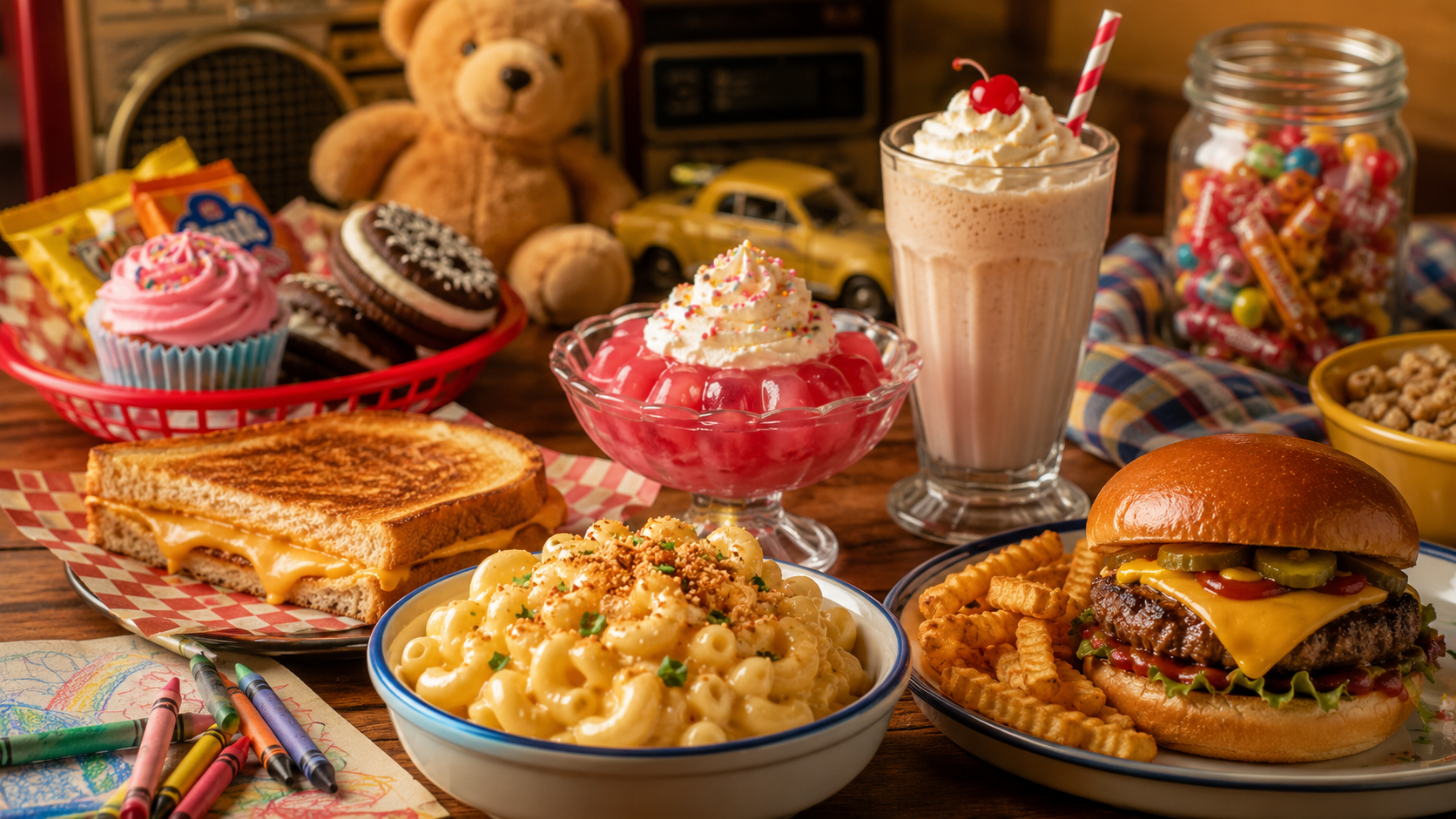
Childhood favorites—from nostalgic desserts and retro snacks to simple casseroles, burgers, puddings, and family-style meals—are finding their way back onto restaurant menus, supermarket shelves, and home kitchens. The difference is that these foods are rarely returning exactly as they were. Instead, chefs and food brands are giving familiar favorites a modern makeover.
The trend is increasingly being described as “nostalgia remix” or “newstalgia”: recognizable foods from the past presented with better ingredients, updated textures, premium touches, or unexpected flavors. Industry trend reports identify this combination of familiarity and creativity as a major force shaping food in 2026.
Why Childhood Food Is Coming Back
One reason is emotional.
Food can be closely connected to memories of family dinners, school lunches, birthday parties, holidays, and weekends at home. When people encounter those familiar flavors again, the experience can feel more personal than simply trying another new dish.
Recent IKEA research found that 40% of people actively seek foods that remind them of childhood, while only 25% said they want to try new foods more often.
That suggests the appeal isn’t simply about recreating old recipes. People are looking for the feeling attached to them.
A bowl of creamy pasta might remind someone of an after-school dinner. A particular pudding could bring back memories of family celebrations. Even a packaged snack can become a small reminder of a particular period in life.
In an increasingly fast-moving food culture, familiarity can be surprisingly powerful.
The New Version Is More Grown-Up
The biggest change is that childhood favorites are being redesigned for adult tastes.
Mac and cheese might come with sharper cheeses, roasted vegetables, or crispy toppings. A classic burger can become a carefully sourced smash burger with sophisticated sauces. A simple fruit punch can be transformed with ingredients such as guava or other contemporary flavors.
Desserts are following the same path.
Retro puddings, Swiss rolls, cheesecake, banoffee pie, and other familiar treats are receiving renewed attention, with food trend analysts specifically pointing to an 1980s-inspired return of nostalgic desserts.
The goal isn’t necessarily to make these foods fancy.
It’s to make them familiar enough to trigger a memory but interesting enough to feel relevant today.
Restaurants Are Leaning Into Comfort
Restaurants have a particularly strong reason to embrace this movement.
The National Restaurant Association’s 2026 culinary forecast places comfort foods among the leading trends, alongside nostalgia, value, and global comfort dishes. The organization says diners are increasingly interested in food that offers emotional comfort while remaining affordable and satisfying.
That helps explain the popularity of dishes that feel homemade rather than overly technical.
There is also a growing interest in restaurant experiences that resemble eating at someone’s home. The so-called “grandma-core” or “nonna-stalgia” movement emphasizes traditional recipes, cozy surroundings, handmade pasta, slow-cooked sauces, and meals that feel personal rather than theatrical.
In other words, the restaurant experience is becoming less about showing customers something they’ve never seen and more about making them feel something they already know.
Fast Food Is Discovering the Power of Memory
The nostalgia trend isn’t limited to independent restaurants.
Major fast-food chains are increasingly bringing back discontinued products and using familiar characters, flavors, and menu items to reconnect with longtime customers. Taco Bell, for example, launched its 2026 Decades menu with several discontinued favorites, including the Meximelt and Beefy Crunch Burrito.
The strategy is straightforward: a familiar product can create an emotional response much faster than an entirely new one.
For brands, that can also make limited-time products especially effective. Customers who remember a discontinued favorite may be motivated to return before it disappears again, while younger customers get the opportunity to discover something they previously missed.
Nostalgia Also Makes Food Feel Safer
There is another factor behind the trend: uncertainty.
Food prices remain an important concern, and consumers can be more cautious about spending money on unfamiliar products. Familiar foods reduce that risk. People generally know what to expect from something they’ve eaten before.
FoodNavigator reports that economic pressure and lower consumer confidence are contributing to renewed interest in familiar and traditional foods. Familiar flavors can provide both comfort and a sense of predictability.
That makes nostalgia more than a marketing gimmick.
It can be a practical response to a world where consumers are increasingly selective about where they spend their money.
The Future Isn’t About Recreating the Past Exactly
The most interesting part of this trend is that it isn’t asking people to go backward.
Instead, food is taking memories from the past and translating them into something new.
A childhood casserole might become a restaurant-quality dish. A familiar candy flavor could appear in a sophisticated dessert. A basic sandwich might receive better bread, locally sourced ingredients, and an unexpected sauce.
That balance is what makes the trend so appealing.
People get the emotional familiarity of something they already love without feeling as though they’re simply eating the same meal they had decades ago.
And that may be why childhood favorites are returning at such an interesting moment. In a food culture obsessed with discovering what’s next, one of the strongest trends of 2026 is reminding people that sometimes the most exciting flavor is the one they already remember.
Leave a Reply