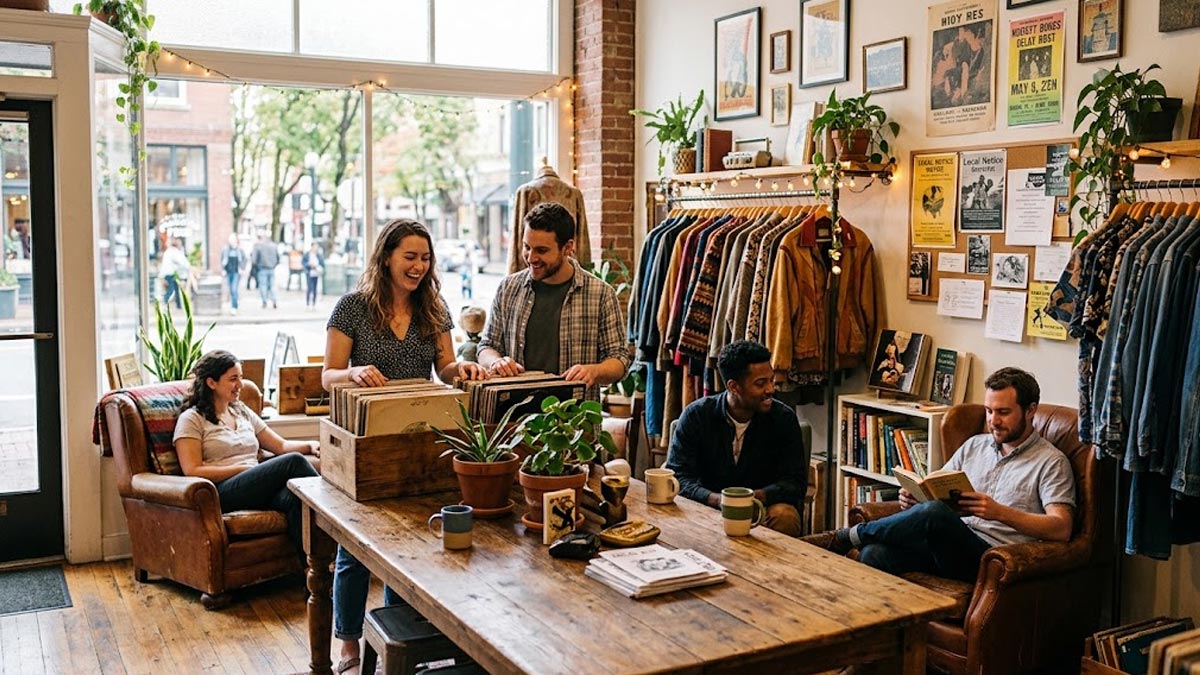
Retail is no longer just about transactions; it’s about connection. As fast fashion and hyper-streamlined e-commerce turn shopping into a rapid, impersonal chore, vintage stores are stepping into a very different role. Across major cities, these curation hubs are evolving beyond mere second-hand clothing racks to become vibrant neighborhood living rooms, cultural archives, and social sanctuaries.
The Evolution from Thrift to Community Hub
Visiting a vintage shop today feels less like hunting through dusty bins and more like stepping into a curated salon. This transformation is driven by a deep desire for tangible culture, sustainability, and human connection.
- Social Gathering Spaces: Many modern vintage stores host weekend pop-ups, coffee corners, vinyl listening sessions, and community workshops, transforming retail space into active social hubs.
- Curated Storytelling: Every piece in a thoughtful vintage shop carries a history. Owners act as curators and storytellers, offering shoppers an immersive narrative that mass-market brands simply cannot replicate.
- Antidote to Fast Fashion Fatigue: Beyond reducing textile waste, vintage shopping satisfies a growing demand for unique personal style that stands out against algorithmic trends and mass production.
- Preserving Local Heritage: These shops frequently serve as neighborhood anchors, preserving architectural character and fostering hyper-local creative economies.
A New Blueprint for Physical Retail
The resurgence of vintage spaces highlights a permanent shift in consumer expectations: people don’t just want to buy things; they want to belong. By prioritizing culture, community, and slow discovery over sheer volume, vintage stores are showing what the future of physical retail can—and should—look like.
Leave a Reply