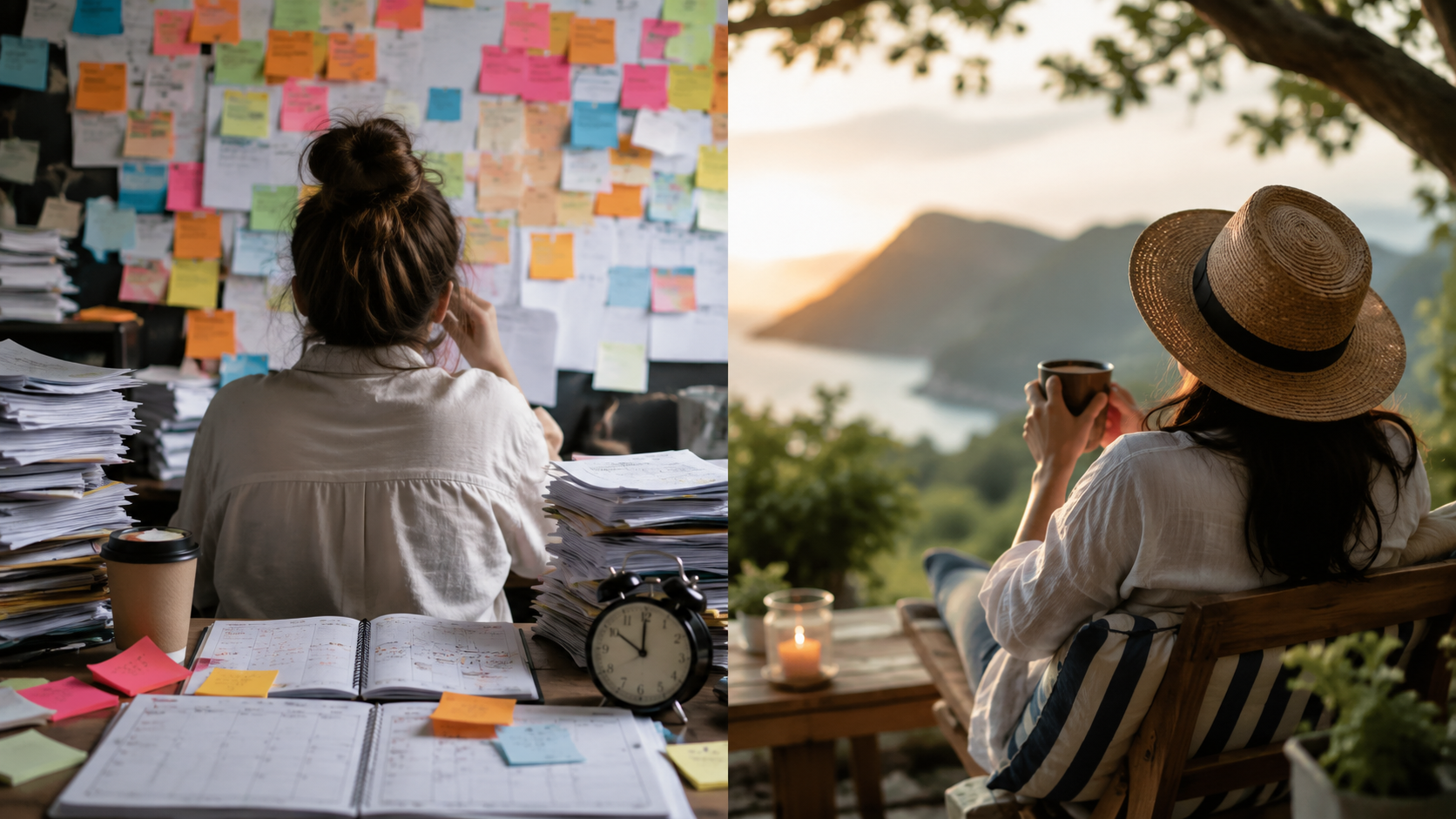
For years, a packed calendar was often treated as a sign that life was going well. Back-to-back meetings, weekend reservations, social events, workouts, trips, and endless to-do lists could make a person feel productive and successful.
But that attitude appears to be losing some of its appeal.
More people are becoming interested in simpler plans: dinner with a few friends, a quiet morning walk, an unstructured weekend, or simply leaving part of the day open. The goal is not necessarily to do less with life. Instead, it is to make the time they have feel more meaningful.
The Problem With a Calendar That Is Always Full
A busy schedule can create the impression that every hour has value only when it is being used.
That mindset can turn leisure into another task to complete. Research on leisure scheduling has found that tightly scheduling enjoyable activities can make them feel more like work, reducing both anticipation and enjoyment.
The result is a strange contradiction: people may spend more time organizing their free time while enjoying that free time less.
A weekend can become a sequence of appointments rather than an opportunity to recover.
Simple Plans Create More Room for Choice
One reason simple plans can feel better is that they leave room for autonomy.
Instead of deciding that Saturday must contain brunch at 10, a museum at noon, shopping at 3, and dinner at 7, someone might simply decide to spend the afternoon with a friend and see where the day goes.
That small amount of flexibility matters.
Recent research involving 338 adults found that satisfaction with leisure was strongly connected to the fulfillment of basic psychological needs, particularly autonomy, competence, and relatedness. Planning was not automatically beneficial; its value depended partly on whether the activities actually matched people’s needs.
In other words, having a plan is not the same thing as having a good experience.
People Are Becoming More Protective of Their Free Time
There is also a broader reason simple schedules can be attractive: time itself feels increasingly valuable.
Research involving more than 6,000 people across several countries found that spending money on time-saving services was associated with greater life satisfaction, with an experiment providing evidence that buying time can improve happiness compared with buying material goods.
That suggests a growing awareness that convenience is not only about getting things done faster. It can also be about creating breathing room.
When free time becomes scarce, people may become less interested in filling every available space.
The Appeal of an Unfinished Day
An open afternoon can feel surprisingly luxurious.
There is no need to rush from one location to another. A person can stay longer over coffee, take a different route home, browse a bookstore, cook something slowly, or simply do nothing for a while.
These moments can seem insignificant compared with a major trip or carefully planned experience. Yet they can provide something that highly structured schedules often lack: the feeling that the day belongs to you.
Interestingly, research suggests that “rough scheduling” can preserve some of the benefits of planning without making leisure feel like another obligation. The difference is flexibility rather than complete structure.
That may explain why simple plans work so well. They provide enough direction to make the day intentional without controlling every minute.
Simple Does Not Mean Boring
Choosing fewer plans does not necessarily mean abandoning ambition, adventure, or social life.
A simple weekend could still involve discovering a new restaurant, visiting a nearby town, taking a long bike ride, or spending several hours with friends. The difference is that the experience does not need to be packed with additional activities.
There is also evidence that leisure can become more meaningful when people engage with activities rather than simply consuming entertainment passively. A 2025 study found that effortful leisure was associated with greater feelings of meaning across several experiments and real-world observations.
That creates an interesting alternative to the traditional idea of a “perfect” free day.
The goal may not be maximum activity. It may be maximum connection to what you are actually doing.
Why This Shift Feels Different
The growing preference for simple plans is not necessarily a rejection of busy lifestyles altogether.
People still have demanding jobs, families, responsibilities, hobbies, and social commitments. What appears to be changing is the assumption that more commitments automatically produce a better life.
A full calendar can communicate importance.
An open calendar can communicate freedom.
For many people, that freedom is becoming more attractive.
Instead of asking, “What else can I fit into this weekend?” they may be asking a different question: “What would make this weekend feel good?”
That shift sounds small, but it changes how time is experienced.
The New Luxury May Be Having Nothing Scheduled
In a culture that has spent years celebrating productivity, simplicity can feel almost rebellious.
It means leaving space between activities. Saying no to plans that are not especially meaningful. Choosing one good experience instead of five mediocre ones. Allowing a quiet evening to remain quiet.
The appeal is not laziness.
It is intentionality.
Simple plans give people the chance to experience their time instead of constantly managing it. And as research continues to show, leisure is most satisfying when it supports autonomy, meaningful connection, and genuine enjoyment rather than becoming another productivity project.
Perhaps the most modern kind of busy life is learning when not to be busy at all.
Leave a Reply