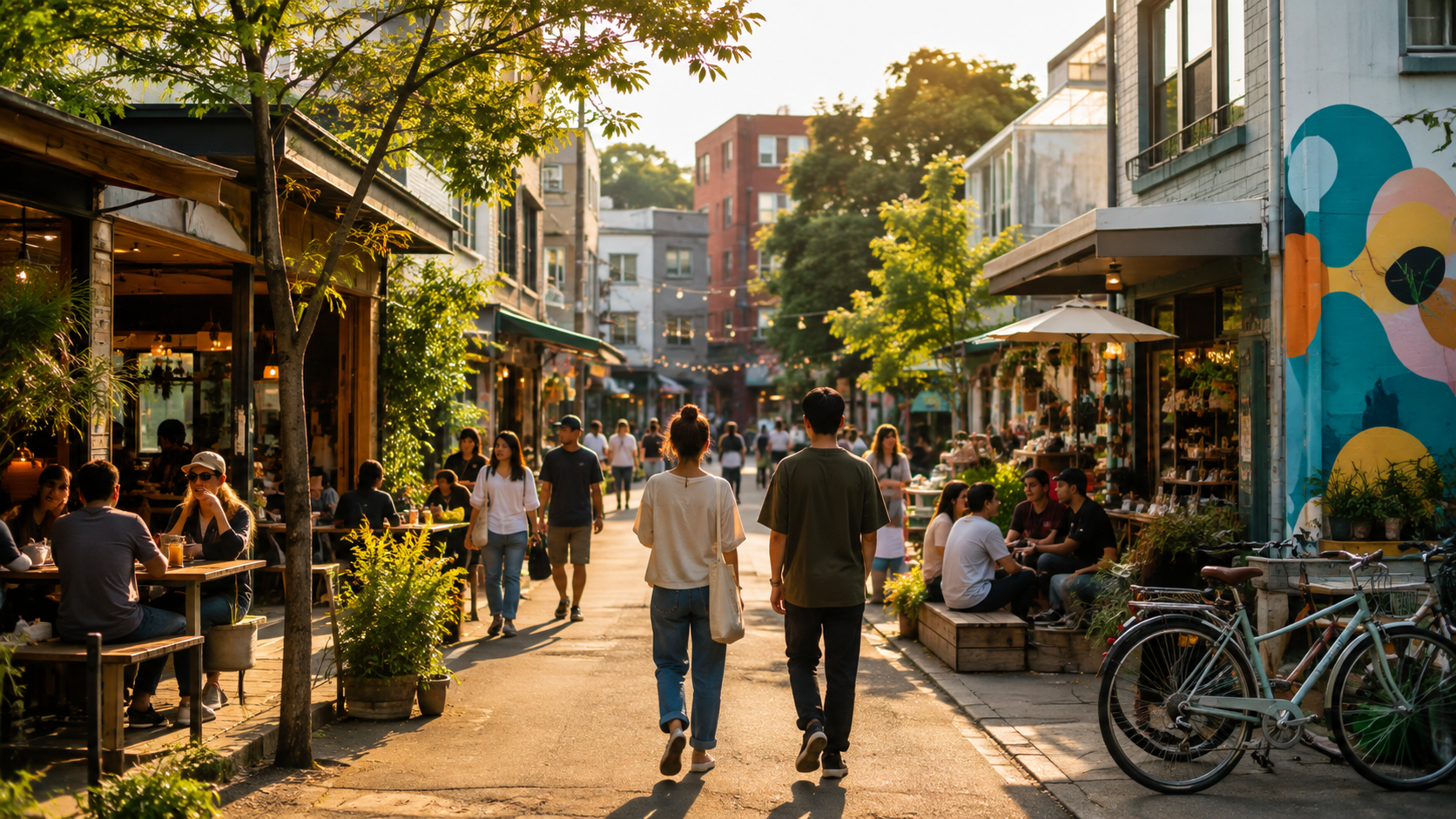
For years, the idea of a “cool” neighborhood was often tied to the same familiar ingredients: trendy restaurants, expensive coffee shops, colorful murals, nightlife, and a few stores that everyone seemed to know. But a new generation is changing that definition.
For younger residents and travelers, neighborhood appeal is becoming less about how polished a place looks and more about how it feels to spend time there.
A neighborhood can be cool without having a famous landmark or a long list of viral attractions. What matters increasingly is whether it feels authentic, social, walkable, creative, and connected to the people who actually live there.
Cool Is Becoming Less About Status
The traditional formula for a desirable neighborhood often revolved around exclusivity. The right restaurants, fashionable boutiques, and expensive apartments could transform an area into a status symbol.
That model is losing some of its influence.
Younger people are often drawn to places where they can participate rather than simply consume. A small community café, independent bookstore, local market, neighborhood basketball court, or casual food stall can be just as attractive as a high-end destination.
The experience feels more personal because it isn’t designed entirely around visitors.
Local Businesses Are Part of the Attraction
Independent businesses are playing an increasingly important role in defining neighborhood identity.
A family-run restaurant with a loyal local following can give a street more character than a chain with a much larger marketing budget. Small bakeries, record shops, vintage stores, workshops, galleries, and specialty food vendors can create the sense that something interesting is happening without feeling manufactured.
For travelers, discovering these places can also feel like finding a side of a city that guidebooks cannot fully explain.
Social Spaces Matter More Than Instagram Spots
Another major shift is the growing importance of places that encourage people to stay.
A beautiful café may attract attention online, but a neighborhood becomes memorable when people actually gather there. Outdoor seating, public squares, small parks, food halls, community markets, and casual gathering spots can become the social heart of an area.
The most interesting neighborhoods often give people reasons to linger.
That might mean having coffee while watching the street, meeting friends after work, browsing a weekend market, or simply sitting outside without feeling pressured to leave.
Walkability Is Becoming a Form of Luxury
For a generation accustomed to constant digital connection, physical convenience can feel surprisingly valuable.
Being able to walk from a café to a bookstore, from a market to a restaurant, or from a park to a small music venue creates a sense of discovery that is difficult to replicate when everything requires a car.
Walkable neighborhoods also encourage spontaneous experiences. You notice the bakery you didn’t plan to visit. You hear music coming from a bar. You discover a tiny shop tucked between two buildings.
Those unexpected moments can become more memorable than a carefully planned attraction.
Imperfection Can Make a Place More Interesting
The new definition of cool also leaves more room for imperfection.
A neighborhood doesn’t necessarily need perfect architecture, spotless streets, or luxury developments. Older buildings, mixed-use streets, local signage, independent vendors, and layers of different cultures can create visual and social character.
Sometimes the most appealing streets are the ones that clearly show how a community has evolved.
That sense of history makes a neighborhood feel lived-in rather than designed from scratch.
Culture Is More Valuable When You Can Experience It
Young travelers are also becoming increasingly interested in everyday culture rather than simply famous attractions.
Instead of only visiting a major museum or landmark, they may want to experience a local food market, listen to neighborhood musicians, join a community event, or see how residents spend an ordinary evening.
The attraction isn’t necessarily a single destination.
The neighborhood itself becomes the destination.
The New Definition of Cool
Ultimately, the coolest neighborhood may no longer be the one with the biggest names or the most expensive storefronts.
It may be the place where people know their local shopkeepers, where strangers share tables, where small businesses experiment, where streets invite walking, and where visitors can experience something that hasn’t been completely packaged for tourists.
That shift is changing how cities are experienced.
For the new generation, a neighborhood doesn’t have to be famous to be fascinating. It simply has to feel alive.
Leave a Reply