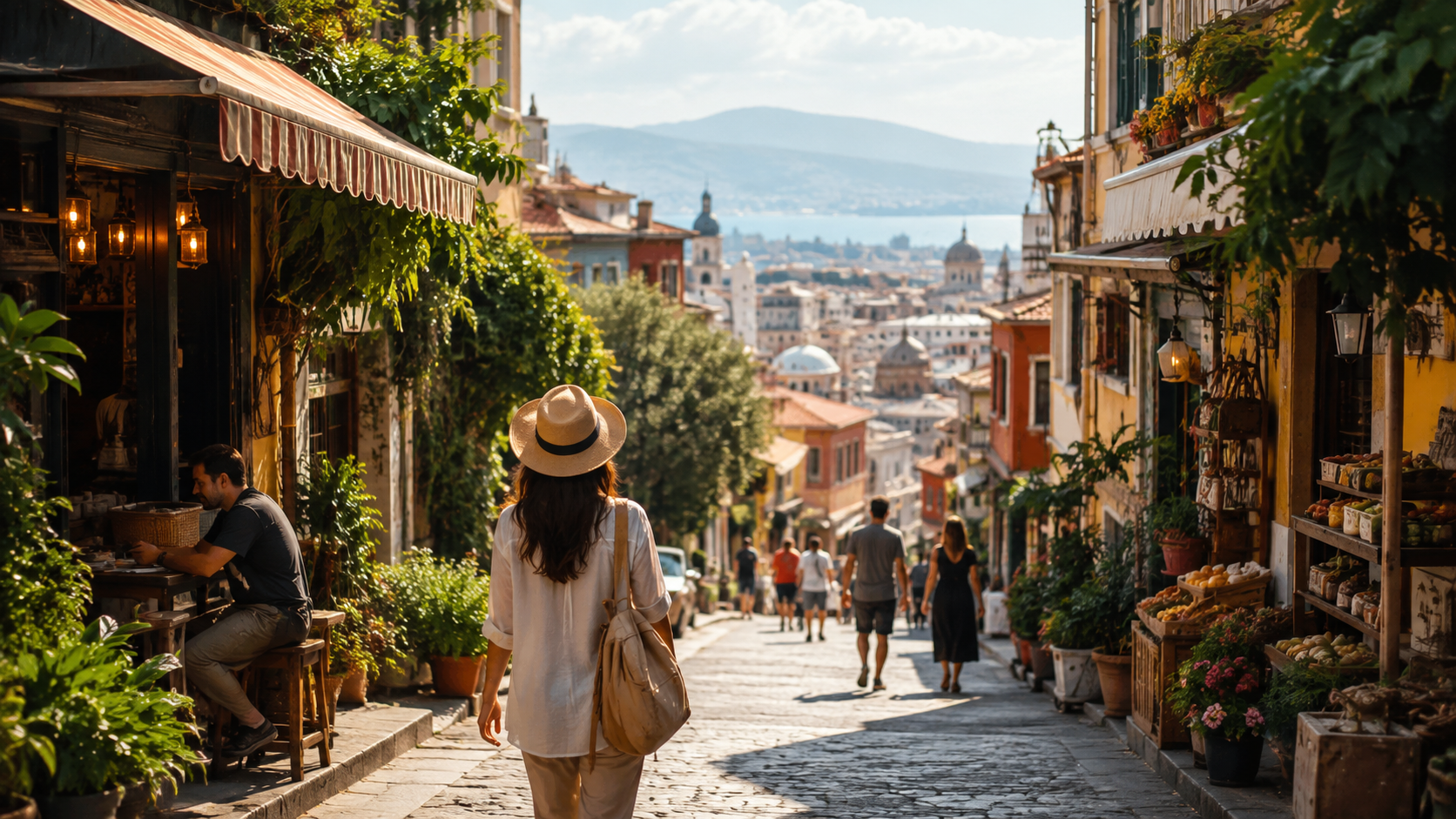
For years, travel has been built around a familiar formula: find the famous landmark, take the obligatory photo, check it off the list, and move on.
But an unexpected shift is changing the way people experience cities. Increasingly, travelers are discovering that the most memorable parts of a trip may not be found at the attractions everyone talks about. They can be found on ordinary neighborhood streets.
A small bakery opening its doors in the morning. A family-run restaurant with a handwritten menu. A street musician playing beneath an apartment balcony. A market vendor arranging fruit before the crowds arrive.
None of these experiences may appear on a traditional sightseeing itinerary. Yet they can reveal something a famous attraction often cannot: what a place actually feels like.
Famous Attractions Show You What a City Is Known For
Major landmarks have obvious value. They tell visitors about a city’s history, architecture, culture, or identity.
The problem is that popularity can make these places feel surprisingly similar.
Visitors arrive at the same viewpoint, stand in the same line, photograph the same building, and follow similar routes through the city. The attraction becomes something to observe rather than something to experience.
Local streets work differently.
They don’t necessarily have a single feature designed to impress visitors. Instead, they offer dozens of small details happening simultaneously.
That combination creates a much richer sense of place.
Ordinary Streets Reveal Everyday Life
One of the biggest advantages of exploring local neighborhoods is that everyday life is happening all around you.
You might see residents stopping for coffee before work, children heading home from school, shop owners talking with regular customers, or neighbors gathering outside in the evening.
These moments aren’t staged for tourists.
That authenticity can make them more memorable than spending an hour looking at a monument.
Travelers often remember how a destination felt long after they forget the exact details of a famous building. The sounds, smells, conversations, and unexpected encounters become part of the memory.
Small Businesses Can Tell Better Stories
Local streets are also where independent businesses tend to thrive.
A tiny restaurant can reveal more about local food culture than a large tourist-oriented dining room. A neighborhood grocery store can show what residents actually buy. A small bookstore can introduce visitors to writers and ideas they might never encounter otherwise.
These businesses are connected to their communities.
Their menus, products, opening hours, and even decorations often reflect local habits. Spending money there also helps keep the neighborhood economy active, giving travelers a way to participate in the destination rather than simply passing through it.
Getting Slightly Lost Can Be Valuable
There is another reason local streets can be so interesting: they leave room for discovery.
Famous attractions come with expectations. You generally know what you are going to see before you arrive.
A neighborhood street offers uncertainty.
Turning down one unfamiliar road might lead to a quiet plaza. Another could reveal a popular lunch spot. A third might offer an unexpectedly beautiful view.
That element of surprise is becoming increasingly important to modern travelers who want experiences that feel personal rather than standardized.
Getting a little lost, within reasonable limits, can turn sightseeing into exploration.
Local Streets Slow Travelers Down
Tourism often encourages people to move quickly.
There is always another landmark to see, another museum to visit, or another photo to take.
Neighborhood exploration creates a different rhythm.
You walk without constantly checking the time. You stop for coffee. You sit in a small park. You notice the architecture of ordinary buildings. You watch people go about their day.
This slower pace can make a short trip feel much longer.
Instead of collecting attractions, travelers begin collecting moments.
The Best Experiences May Not Be Searchable
Perhaps the most surprising advantage of local streets is that some of their best experiences cannot easily be found online.
A famous attraction has a website, reviews, rankings, photos, and social media posts.
A neighborhood bakery might simply have a sign above its door.
A local gathering place may have no digital presence at all.
That doesn’t make these places less valuable. In some cases, it makes them more interesting.
Travelers have become accustomed to researching almost every detail of a trip in advance. Leaving a little space for discovery can bring back an element of spontaneity that digital travel planning sometimes removes.
This Doesn’t Mean Skipping the Famous Sights
There is no reason to abandon major attractions completely.
They can be extraordinary, especially when they provide genuine insight into a destination’s history or culture.
The better approach may be to combine both experiences.
Visit the landmark everyone recommends. Then walk a few streets away.
See the famous square, then explore the neighborhood behind it.
Try the celebrated restaurant, then have breakfast at a small café nearby.
The contrast can make both experiences more meaningful.
The Real Attraction Might Be the Neighborhood
The growing interest in local streets reflects a broader change in travel.
People are increasingly looking for experiences that feel authentic, spontaneous, and connected to everyday life. They don’t necessarily want to spend an entire trip following the same itinerary as thousands of other visitors.
Sometimes the most interesting part of a destination is not its biggest attraction.
It is the street next to it.
And once travelers start paying attention to those ordinary streets, they may discover that the places without famous names often become the stories they remember most.
Leave a Reply