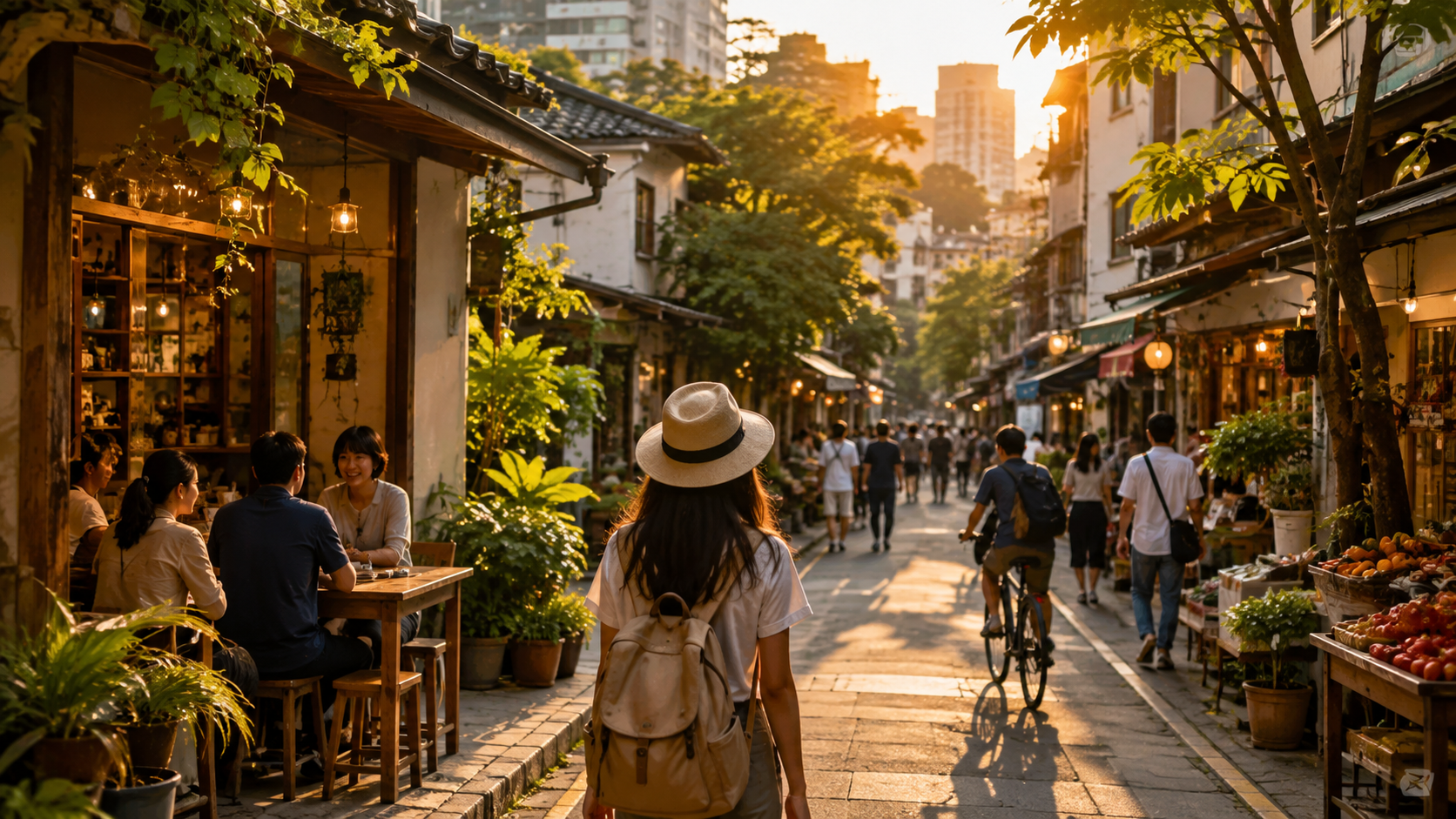
For decades, travel advice often centered on the biggest attractions a destination had to offer. Famous landmarks, world-class museums, iconic viewpoints, and bucket-list experiences were treated as essential stops. But a different kind of travel is increasingly capturing people’s attention: exploring the neighborhoods where everyday local life actually happens.
The shift is not necessarily about abandoning major attractions. Instead, travelers are discovering that a destination can feel more memorable when they spend time understanding how people live, eat, socialize, and move through their own communities.
Travelers Want Experiences That Feel Personal
One reason neighborhood culture has become more valuable is that modern travelers are increasingly looking for experiences that feel authentic and personal.
A famous attraction may be impressive, but it can also feel familiar. Millions of photographs, videos, reviews, and social media posts have already documented the experience. By contrast, walking through a residential neighborhood, discovering a small café, visiting a local market, or watching people gather in a public square can create moments that are much harder to replicate.
These experiences often leave travelers with a stronger sense of having actually encountered a place rather than simply visited its most famous sights.
Social Media Has Changed What Counts as a Destination
Ironically, social media has helped fuel interest in places that were once overlooked.
Travelers now discover neighborhoods through short videos showing local restaurants, independent shops, street markets, murals, parks, bakeries, and everyday scenes. A neighborhood that never appeared in a traditional guidebook can suddenly become part of someone’s travel itinerary because a few minutes of ordinary local life looked interesting online.
This creates a new form of destination discovery. Instead of asking, “What landmark should I see?” travelers are increasingly asking, “Where do people actually spend their time here?”
Small Businesses Become Part of the Experience
Neighborhood culture is also closely connected to independent businesses.
A small restaurant, family-run bakery, neighborhood coffee shop, bookstore, or market can tell visitors something about a community that a large attraction often cannot. Food, architecture, storefronts, conversations, and local routines all become pieces of the travel experience.
For visitors, this can make a trip feel more intimate. For local businesses, it can create opportunities to attract travelers without being located next to a major tourist landmark.
Travelers Are Looking for the “Real” City
There is also growing fatigue with highly standardized tourism.
Major attractions can sometimes make different destinations feel surprisingly similar. The same international hotel brands, familiar shopping districts, and heavily photographed landmarks can create a predictable travel experience.
Neighborhoods offer the opposite. Their character comes from details that are difficult to copy: the way streets are designed, the foods people eat, the businesses that have survived for decades, the languages heard on sidewalks, and the traditions that shape daily life.
That sense of difference is increasingly valuable.
Slow Travel Makes Neighborhoods More Important
The growth of slower, more immersive travel has strengthened the appeal of neighborhoods as well.
Instead of trying to visit ten attractions in one day, some travelers prefer spending several hours in one area. They might have breakfast, walk through a market, visit a small gallery, stop at a café, and return later for dinner.
This approach gives travelers time to notice details that are easy to miss when rushing between major attractions.
It also creates a more relaxed relationship with the destination. The neighborhood becomes less of a backdrop and more of a place to experience.
The Best Trips May Combine Both
None of this means major attractions are becoming irrelevant.
Iconic landmarks remain iconic for a reason. They can provide historical context, spectacular views, cultural significance, and unforgettable first impressions.
The difference is that travelers increasingly see these attractions as only one part of a larger experience.
A famous museum might introduce visitors to a city’s history. A neighborhood restaurant can show them how that history influences food and everyday life today. A major monument can explain a city’s past, while a local street can reveal what the city feels like in the present.
Together, they create a much richer picture.
Neighborhoods Could Become the New Travel Hotspots
As travelers become more interested in authenticity, connection, and discovery, neighborhood culture is likely to play an even larger role in tourism.
The most memorable part of a trip may not always be the attraction everyone told you to visit. It could be the tiny restaurant you discovered by accident, the market you wandered into without a plan, or the street where you spent an afternoon simply watching the city go by.
That may be the biggest change in modern travel: people are realizing that you don’t always have to find the most famous place to find the most meaningful experience.
Sometimes, you just need to find the neighborhood where the destination feels most like itself.
Leave a Reply