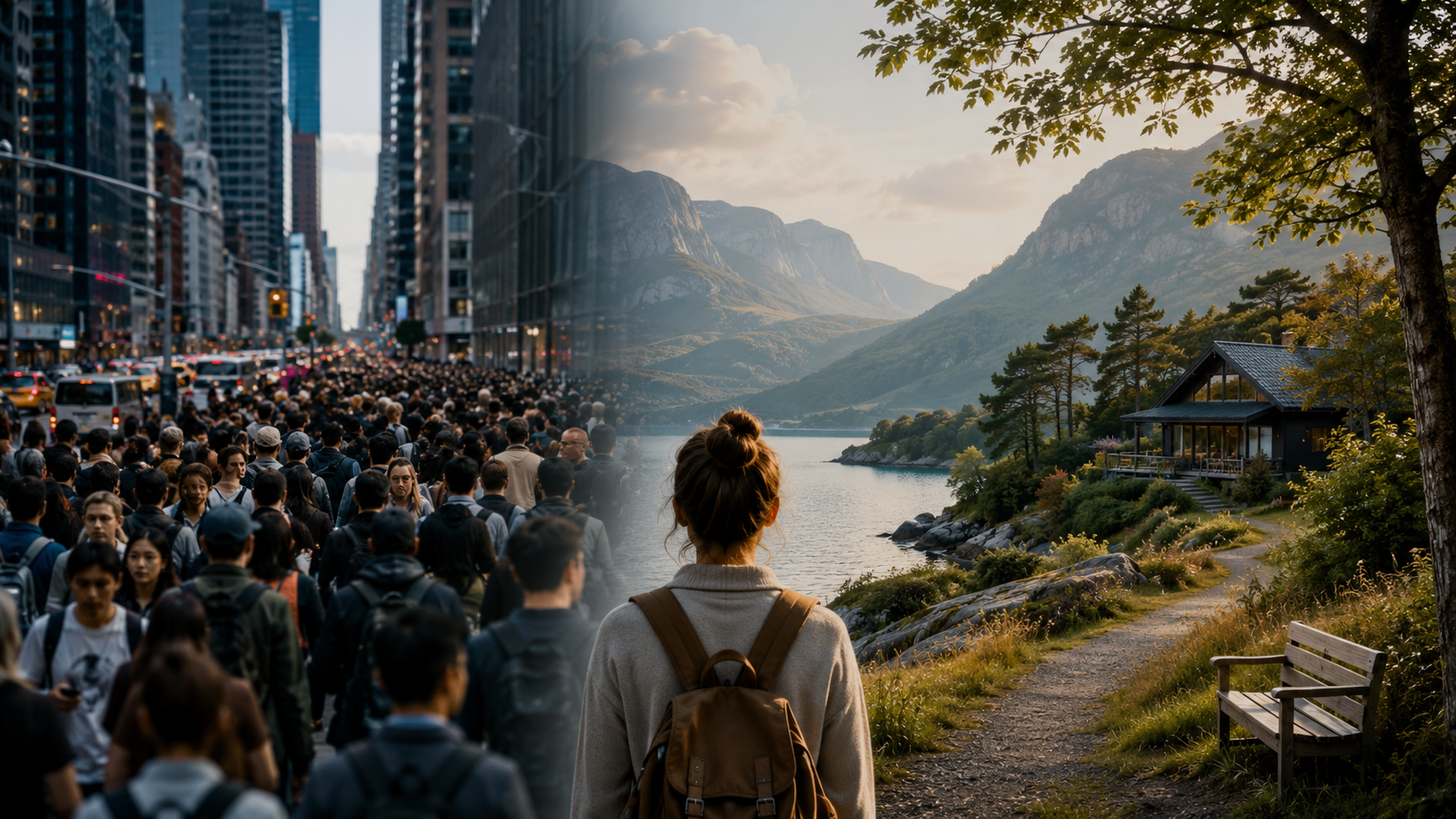
For years, the classic idea of a great vacation involved famous cities, packed attractions, iconic landmarks, and a carefully planned schedule. But a different kind of travel is quietly gaining momentum: trips built around space, slower mornings, peaceful surroundings, and places that do not constantly demand attention.
Quiet destinations—from small coastal towns and mountain villages to countryside retreats and lesser-known regional cities—are becoming increasingly attractive to travelers who want something more restorative than a traditional sightseeing trip.
Travelers Are Looking for a Break From Constant Stimulation
Modern life already comes with notifications, traffic, crowded workplaces, social media, and endless schedules. For many travelers, spending their vacation in another busy environment can feel less like an escape and more like a change of scenery.
Quiet destinations offer the opposite experience.
Instead of rushing between attractions, visitors can spend an afternoon walking through a small town, sitting at a local café, exploring a quiet trail, or simply enjoying the landscape. The appeal is not necessarily having more things to do. It is having fewer things competing for attention.
That shift is changing what people consider valuable when they travel.
The “Do Less” Vacation Is Becoming More Appealing
Travel used to be measured partly by how much someone could accomplish during a trip: how many landmarks they visited, restaurants they tried, or neighborhoods they explored.
Now, the quality of the experience can matter more than the number of activities.
A quiet destination makes it easier to build an unstructured day. Breakfast can become a long morning. A short walk can turn into an afternoon exploration. A scenic viewpoint does not need to be followed by five more attractions.
This slower pace can make a trip feel more memorable because travelers have time to actually experience where they are rather than simply move through it.
Smaller Places Often Feel More Personal
Crowded tourist destinations can sometimes make visitors feel like they are following a predetermined route.
Quiet places tend to offer more room for spontaneous discoveries.
A small bakery, neighborhood market, family-run restaurant, local bookstore, or roadside viewpoint may become the highlight of a trip. These experiences often feel more personal precisely because they were not necessarily designed to attract millions of visitors.
For travelers increasingly interested in local culture, that sense of discovery is a major attraction.
Nature Becomes Part of the Experience
Many quiet destinations are surrounded by landscapes that naturally encourage a slower rhythm.
Forests, lakes, beaches, hills, farmland, and rivers provide activities without requiring a packed itinerary. Hiking, swimming, cycling, photography, fishing, or simply watching a sunset can become the main event.
This also changes the relationship travelers have with time. Instead of constantly checking what comes next, they can focus on what is happening in front of them.
Social Media May Be Changing Travel in an Unexpected Way
Social media helped create enormous interest in famous destinations, but it has also exposed travelers to the downsides of overtourism.
Images of crowded viewpoints, long queues, congested streets, and heavily visited attractions can make a famous destination look less appealing than it once did.
At the same time, social platforms have made it easier for smaller destinations to gain attention. A quiet village, scenic road, hidden beach, or charming regional town can suddenly become the inspiration for an entire trip.
The result is an interesting contradiction: the same technology that helped popularize crowded destinations is also helping travelers discover alternatives.
Quiet Does Not Mean Boring
Perhaps the biggest misconception about quieter destinations is that there is nothing to do.
In reality, the experience simply tends to be different.
Instead of museums every morning and major attractions every afternoon, travelers might spend their time kayaking, visiting farmers’ markets, taking scenic drives, exploring local food, walking historic streets, or meeting residents.
The attraction is often the atmosphere itself.
A destination does not have to be famous to be interesting. Sometimes its lack of international fame is exactly what makes it appealing.
The Future of Travel May Be Less About Seeing Everything
The growing interest in quiet destinations reflects a broader change in how people think about leisure.
Travelers are increasingly asking not only, “Where should I go?” but also, “How do I want to feel when I get there?”
For some, the answer is excitement and energy. For others, it is calm.
That does not mean crowded cities are disappearing from travel plans. Major destinations will continue to attract people because of their culture, history, food, architecture, and entertainment.
But alongside them, quieter places are gaining a stronger role.
The next memorable trip may not involve checking off the world’s most famous attractions. It might involve a small house near a forest, a quiet coastal road, a local breakfast, and an afternoon with nowhere else to be.
And for many travelers, that may be exactly the point.
Leave a Reply