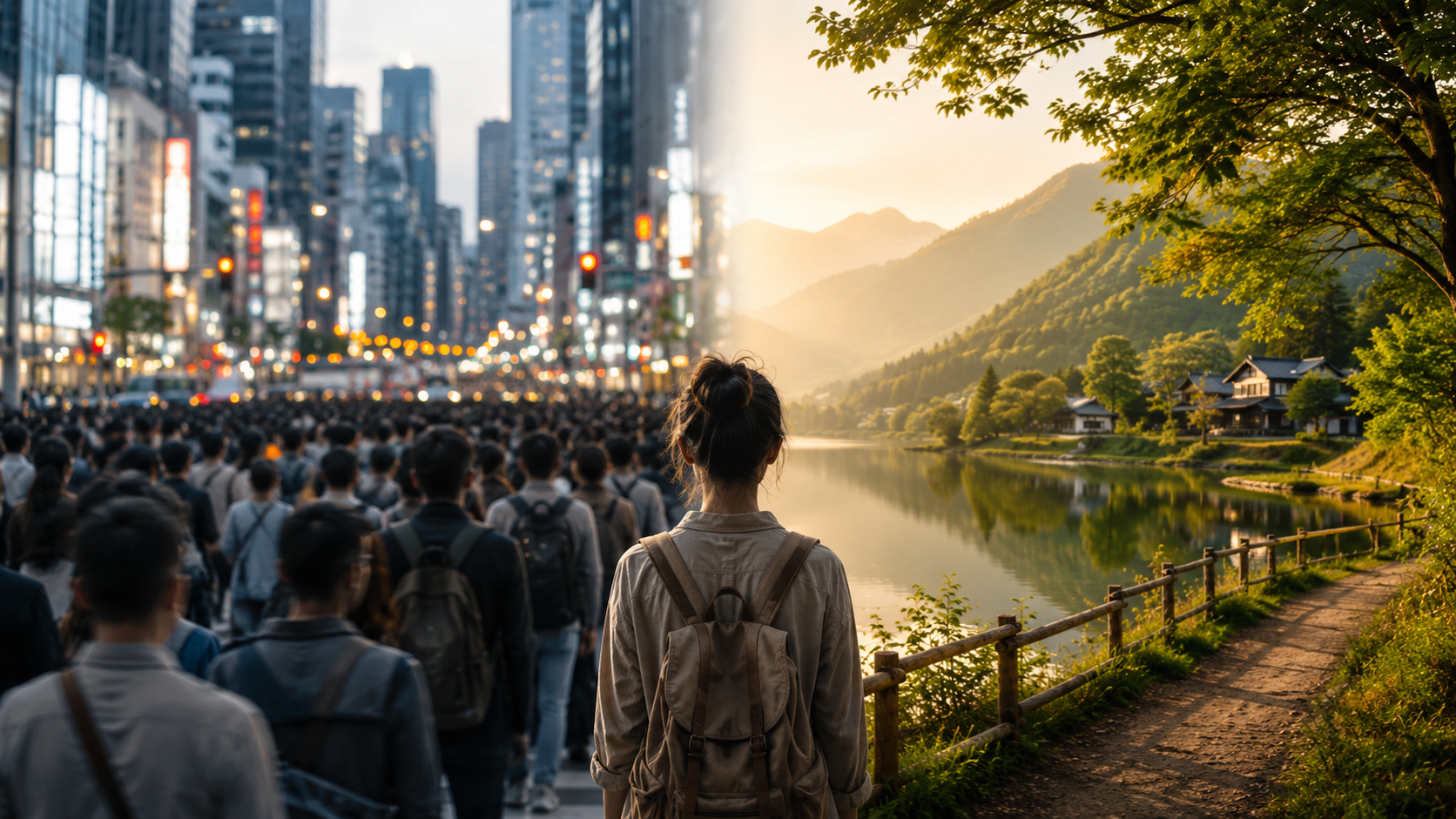
For years, city breaks were considered the ultimate way to travel. Big cities offered famous landmarks, packed restaurant scenes, cultural attractions, nightlife, and endless things to do. But a growing number of travelers are starting to want something very different: space, silence, and a slower pace.
Quiet destinations—from small coastal towns and mountain villages to countryside retreats—are becoming increasingly attractive for people who feel that modern travel can sometimes be just as exhausting as everyday life.
Travelers Are Looking for a Different Kind of Escape
A vacation used to mean seeing as much as possible. Travelers would build packed itineraries, move between attractions, and try to experience every famous location within a few days.
Now, many people are redefining what a successful trip looks like.
Instead of asking, “How many places can I visit?” travelers are increasingly asking, “How relaxed can I feel when I return home?”
That shift makes quieter destinations especially appealing. A small town with a scenic walking trail, a peaceful lake, or a local café can offer an experience that feels more restorative than rushing through a major tourist attraction.
Crowds Can Change the Travel Experience
Popular cities naturally attract visitors because they offer recognizable landmarks and a wide range of activities. But popularity can also create long lines, busy streets, crowded public transportation, higher prices, and constant noise.
For some travelers, these inconveniences are becoming harder to ignore.
Taking a photo at a famous landmark can feel less exciting when hundreds of other people are trying to do exactly the same thing. Eating at a popular restaurant may require reservations weeks in advance. Even simply walking through a historic district can become stressful during peak travel periods.
Quiet destinations provide the opposite experience.
There may be fewer attractions, but that can become part of their appeal.
The Rise of Slow Travel
The growing interest in quieter destinations is closely connected to the broader rise of slow travel.
Slow travel encourages people to spend more time in one place rather than constantly moving from one attraction to another. Travelers might stay several nights in a small town, explore local neighborhoods on foot, visit independent businesses, or simply spend an afternoon enjoying the scenery.
The goal isn’t necessarily to do less. It’s to experience more without constantly rushing.
A quiet destination can make that approach much easier.
Nature Has Become Part of the Luxury
Another reason peaceful destinations are gaining attention is the increasing value people place on nature.
Mountains, forests, beaches, lakes, and open countryside offer something that crowded urban environments often cannot: uninterrupted space.
For travelers spending much of their daily lives surrounded by screens, traffic, buildings, and notifications, a few days surrounded by nature can feel surprisingly luxurious.
A morning walk beside a lake or an evening watching the sunset from a quiet hillside doesn’t require a complicated itinerary. Yet these simple experiences can become the most memorable parts of a trip.
Smaller Places Can Feel More Authentic
Quiet destinations also give travelers opportunities to experience everyday local life.
Instead of moving between major attractions, visitors may spend time at neighborhood markets, family-owned cafés, small restaurants, local festivals, and community spaces.
These experiences can feel more personal because they are not necessarily designed around mass tourism.
Travelers aren’t just observing a destination. They have more opportunities to understand how people actually live there.
Social Media May Be Changing What “Worth Visiting” Means
Interestingly, social media has helped popularize destinations that were once overlooked.
Travel content no longer focuses exclusively on famous landmarks. Photos and videos of peaceful villages, hidden beaches, scenic train rides, countryside cabins, and quiet streets can attract enormous attention.
This creates a new kind of travel inspiration.
Instead of searching only for the places everyone already knows, travelers are increasingly interested in discovering places that feel different from the usual tourist route.
The most desirable destination may no longer be the one with the longest list of attractions. It may be the one that creates the strongest feeling.
Quiet Doesn’t Mean Boring
One misconception about peaceful destinations is that there is nothing to do.
In reality, many quiet places offer activities that simply move at a different rhythm.
Travelers can hike, cycle, swim, kayak, explore local food, visit small museums, photograph landscapes, browse local markets, or take scenic drives. Even doing nothing can become part of the experience.
The difference is that these activities don’t always compete for attention.
There is less pressure to constantly move on to the next attraction.
A New Definition of a Great Trip
The growing popularity of quiet destinations reflects a broader change in how people think about travel.
After years of increasingly busy schedules and highly optimized experiences, travelers are discovering that a memorable trip doesn’t always need to be dramatic.
Sometimes the best vacation is a place where the mornings are quiet, the streets are walkable, the scenery is beautiful, and the schedule has plenty of empty space.
Crowded cities will continue to attract travelers—and for good reason. They offer energy, culture, history, entertainment, and incredible food.
But quiet destinations are proving that there is another kind of luxury in travel.
Sometimes, the most valuable thing a destination can offer is simply the chance to slow down.
Leave a Reply