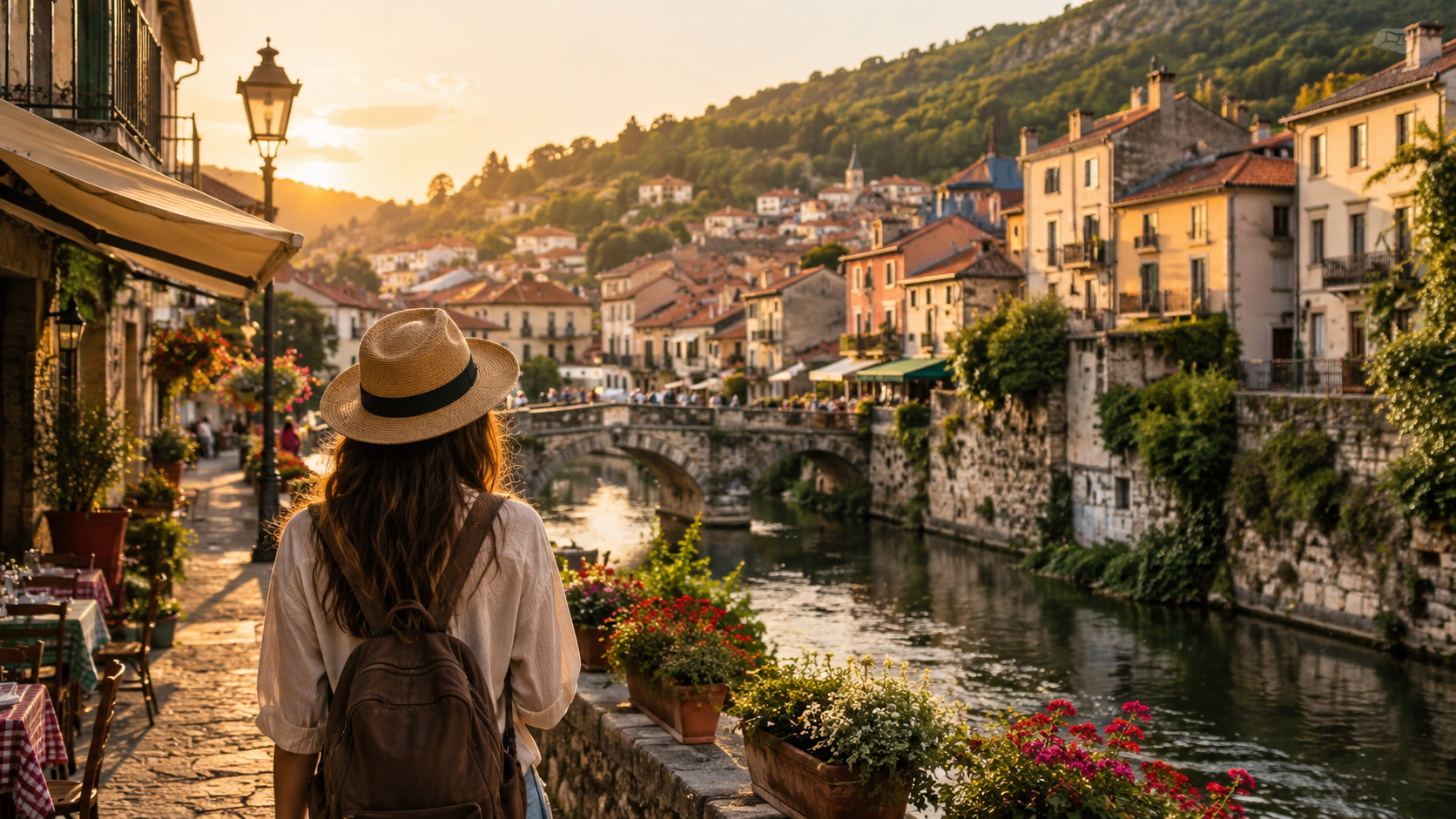
For years, the idea of a great vacation has been closely tied to famous destinations. Paris, Tokyo, Bali, New York, Rome, and other globally recognized cities dominate travel lists, social media feeds, and bucket-list itineraries.
But a quieter travel trend is changing that.
More travelers are beginning to look beyond the world’s most recognizable destinations and discovering that some of the most memorable trips can happen in smaller cities that rarely appear at the top of international travel rankings.
These places may not have iconic skylines or endless tourist attractions. What they often offer instead is something increasingly valuable: a slower pace, distinctive local culture, excellent food, walkable neighborhoods, and the feeling that you are actually discovering somewhere rather than simply checking off a famous attraction.
Why Smaller Cities Are Becoming More Appealing
Traveling to a major tourist destination can be exciting, but it can also come with crowds, expensive accommodation, long lines, and carefully planned schedules.
Smaller cities often provide a completely different experience.
You can spend a morning wandering through a historic neighborhood, stop at a local café for lunch, visit a market in the afternoon, and finish the evening at a restaurant filled mostly with residents.
That slower rhythm can make a trip feel less exhausting and more personal.
For travelers who want experiences rather than a collection of photographs, that difference can be significant.
The Food Can Be Just as Memorable
One of the biggest surprises in smaller cities is often the food.
Restaurants in famous destinations frequently receive international attention, which can make reservations difficult and prices higher. In lesser-known cities, travelers may find family-owned restaurants, neighborhood bakeries, food markets, and small cafés that have been serving local communities for years.
The experience is often less about following a famous restaurant guide and more about discovering something unexpectedly good.
A simple local dish eaten in a busy neighborhood restaurant can become one of the strongest memories of an entire trip.
Smaller Cities Often Feel More Authentic
There is no single definition of an “authentic” travel experience, but smaller destinations can make it easier to observe everyday life.
Instead of spending most of the day surrounded by visitors, travelers may encounter ordinary routines: people shopping at local markets, families gathering for dinner, commuters heading home, and residents enjoying public spaces.
That doesn’t mean famous destinations are inauthentic. Rather, smaller cities can make it easier to experience a destination outside its biggest tourist attractions.
You are not necessarily seeing less.
You may simply be seeing a different side of a place.
Walkability Can Change the Entire Trip
Many smaller cities are surprisingly easy to explore on foot.
Historic centers, compact neighborhoods, pedestrian streets, local markets, cafés, parks, and cultural attractions may all be located relatively close together.
That creates opportunities for spontaneous discoveries.
A traveler might turn down an unfamiliar street and find a small bookstore. A short walk could lead to a neighborhood bakery or a quiet square. Instead of moving from one major attraction to another, the city itself becomes part of the experience.
That sense of discovery is difficult to schedule—and often becomes the highlight of a trip.
They Can Also Be Easier on the Budget
Smaller destinations are not automatically cheap, especially in popular regions or during peak travel seasons. However, they can offer more choices for travelers trying to control costs.
Accommodation outside major tourist centers may be more affordable. Restaurants serving local residents can also provide better value than establishments located directly beside major attractions.
Transportation costs can sometimes be lower too, particularly when much of the city can be explored on foot.
For travelers who would rather spend their money on experiences than premium hotel locations, smaller cities can be especially attractive.
Some Small Cities Worth Discovering
Across Europe, Asia, the Americas, and beyond, travelers can find smaller destinations with enough character to fill an entire vacation.
In Europe, cities such as Ljubljana, Brno, and Graz offer historic architecture, local food scenes, and a more relaxed atmosphere than many of the continent’s biggest tourist capitals.
In Asia, destinations such as Kanazawa can provide travelers with traditional neighborhoods, gardens, crafts, and regional cuisine without the scale and intensity of Japan’s largest cities.
Elsewhere, smaller cities can offer equally compelling combinations of history, nature, architecture, and culture.
The important point is not to find a definitive list of “best” small cities.
It is to recognize that extraordinary travel experiences are not limited to famous names.
The Joy of Having Fewer Plans
One of the most underrated advantages of visiting a smaller city is that travelers may not feel pressured to fill every hour.
When visiting a world-famous destination, there can be a constant temptation to visit one more landmark, museum, viewpoint, or restaurant.
In a smaller city, there may be less pressure to follow a checklist.
That creates room for something many modern travelers rarely get enough of: free time.
You can sit at a café longer than expected. You can revisit a market. You can spend an afternoon in a park. You can simply walk without knowing exactly where you are going.
Those unplanned moments can make a vacation feel like an escape rather than a project.
Social Media Is Changing What Travelers Discover
Social media has also played a role in making lesser-known destinations more visible.
A short video showing a beautiful old street, a local food market, or an inexpensive weekend getaway can introduce millions of people to a place they had never considered before.
But there is an interesting paradox.
A destination can become popular because people want to escape overcrowded tourist hotspots, only to become crowded itself.
That is why travelers may increasingly look beyond the newest viral destination and search for places that still have a strong local identity.
The next great trip may not be the place everyone is posting about today.
It could be the city you have barely heard of.
Smaller Does Not Mean Boring
A common misconception is that smaller cities lack enough attractions for a full vacation.
In reality, travelers often underestimate how much there is to experience when history, food, neighborhoods, culture, and surrounding nature are considered together.
A city does not need dozens of internationally famous landmarks to be interesting.
A beautiful historic center, a good food culture, interesting museums, friendly public spaces, and easy access to nearby landscapes can be more than enough.
Sometimes having fewer attractions actually makes the trip better because you have time to appreciate them.
The Best Destination May Be the One You Didn’t Expect
Travel is ultimately about more than collecting famous locations.
Some of the strongest memories come from unexpected places: a meal discovered by accident, a conversation with a local, a quiet street at sunset, or a neighborhood that was never included in the original itinerary.
Small cities can make those moments easier to find.
As travelers become more interested in slower, more personal experiences, destinations without global fame may become increasingly attractive.
The next time you plan a trip, consider looking beyond the usual names.
You might discover that an amazing vacation does not require a famous destination at all.
Sometimes, the best place to travel is simply somewhere that gives you room to explore, eat well, slow down, and experience a place on your own terms.
Leave a Reply